
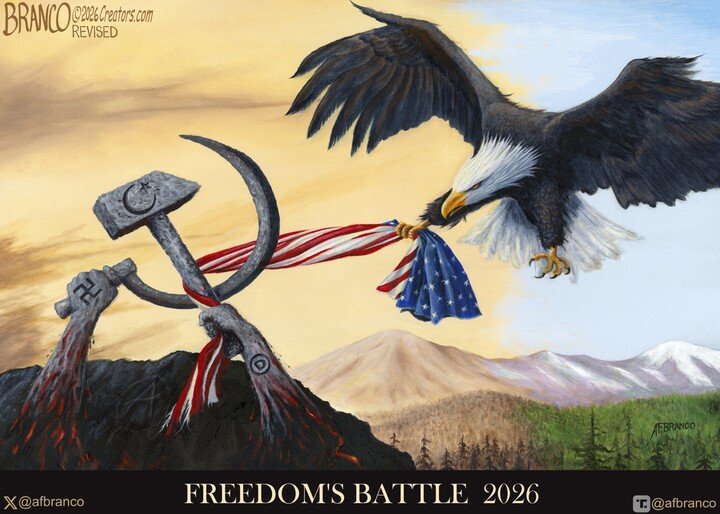
July 4th, 2026 marks my 66th year as an American citizen.
In 1960 my mother and I were both sworn in as U.S. citizens.
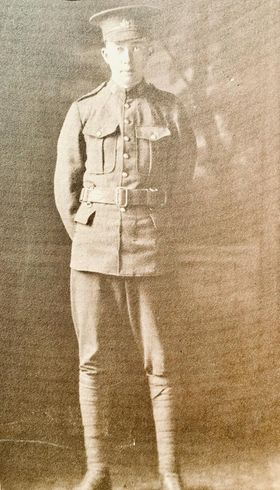
My parents immigrated to the United States after Canadian doctors told my father, Cecil, that he needed to move to a warmer climate due to his deteriorating health caused by the German chlorine gas attack on his contingent of volunteer Canadian troops in Ypres, Belgium April 25, 1915, during World War I. It was the first use of poisonous gas in that war.
In 48 hours in Ypres, 6,035 Canadians, one man in every three, became casualties of whom more than 2,000 died, mostly from poisonous gas. Those were heavy losses for that small body of volunteer Canadian troops. Due to those losses conscription was passed in Parliament August 1917.
Conscription for World War II didn’t begin in Canada until after the Normandy landings in 1944, where Canada had its own beachhead, Juno, and were among the first allied forces to break through into the interior of France.
Following World War I my father faced another emotional hurdle, the death of his first wife, from the pandemic Spanish flu, leaving him alone to raise his son Bob, who became my half-brother when my Mother and Cecil Scott married.
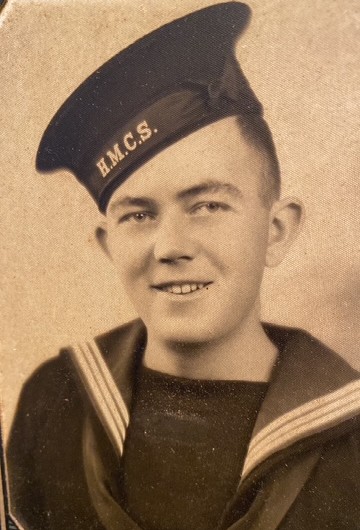
Bob served his country in World War II on a Royal Canadian Navy destroyer that fired on German positions as Americans, British and Canadians stormed the beaches. He fired over the head of his stepmother’s brother, Norman, my uncle, who landed on Juno beach.
Bob was wounded, met a Welsh nurse, who eventually became his wife, and both eventually joined us in Florida, becoming proud U.S. citizens as did their two daughters. Our brother Paul also became a U.S. citizen and served in the U.S. Air Force. I served in the U.S. Army.
My uncle, Norman, who landed on Juno Beach with the Canadian army, also immigrated and became an American citizen as did his son, John, who served in the U.S. Air Force. Norman’s two daughters are also U.S. citizens, one born here, one naturalized.
We are a fiercely patriotic family, all proud Americans and those of us that still survive are thrilled that we’re able to celebrate our adopted country’s 250th birthday.
I’ve discovered over the years that naturalized citizens are some of the most patriotic and proud Americans.
Canada was not then and still isn’t a totalitarian country and the reasons that many in my family immigrated here were because of the opportunities America offered. We were not escaping oppression, the threat of death or confiscation of our properties, but seeking opportunities and in my father’s case, a healthier climate. Unfortunately, he succumbed to his wounds at the age of just 58.
My widowed mother went to work to pay the rent and buy groceries. Not once, that I heard, did she ever consider moving back to Canada. She loved her adopted country and instilled a strong sense of patriotism in her sons.

Following my father’s death my mother moved us to Tampa, where I was introduced to another community of expatriates, Cubans, who fled Fidel Castro’s communist dictatorship. Despite leaving many of their family members, homes, and fortunes behind, I don’t think I’ve ever met a happier, more welcoming group of people. Families gathering in their yards, eating, singing, and laughing were common as I biked through Tampa neighborhoods. It was rare when I wasn’t called out to join them.
Whenever I was invited into a home by one of my new Cuban pals, no matter what time of day, there was always a pot of something simmering on the stove. I was inevitably asked if I was hungry, and no matter my answer I was given a steaming hot bowl of whatever was in that pot and told “¡Come!” — “Eat”. I did as I was told, explaining to my frustrated mother later that evening that I wasn’t hungry for dinner. To this day I love Spanish bean soup and chicken with yellow rice.
During my U.S. Army service, I met many other expats from Germany, Russia, various Latin American countries, etc. all enthusiastic new residents, excited that following their service they could become American citizens.
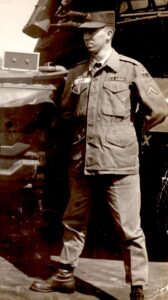
I don’t recall hearing individuals from a foreign country living here utter a negative word about his or her newly adopted country, not once.
I’ve only heard that recently, oddly enough from foreign-born members of the U.S. Congress, e.g. Ilhan Omar, from Somali, Pramila Jayapal, who was born in India, etc. These are people who should be heaping praise on America for providing them opportunities they could never have imagined much less experienced in their native countries. Their negative attitudes are as incomprehensible to me as they are repulsive.
Later in life I worked and lived for several years in France and Belgium. I enjoyed my experiences there, made many friends and never once experienced anything but warm hospitality from the people. However, I was always happy to return to the U.S. and enjoy certain experiences that can’t be replicated elsewhere.
The late International Herald Tribune sports editor Dick Rorabeck described an American expatriate’s feelings in the Paris-based Herald Tribune with his 1960s springtime elegy, “The Crack of the Bat”. Following are two stanzas:
Away on this side of the ocean
When the chestnuts are hinting of green
And the first of the café commandos
Are moving outside for a fine
And the sound of spring beats a bolero
As Paree sheds her coat and her hat
The sound that is missed more than any
Is the sound of the crack of a bat.
No, a Yank can’t describe to a Frenchman
The rasp of an umpire’s call
The continuing charms of statistics
Changing hist’ry with each strike and ball
Nor the self-conscious jog of the slugger
Rounding third with the tip of his hat
Nor the half-smothered grace of a hook slide
Nor the sound of the crack of a bat.
Like most Americans I am filled with pride as I watch the millions of foreign nationals visiting the U.S. for the World Cup shouting the praises of America. To their delight they discovered that the “Shining city on the hill” that Ronald Reagan repeatedly spoke of is real and filled with friendly, kind, welcoming people, incredible landmarks, magnificent scenery, an amazing variety of good food, and so much more.
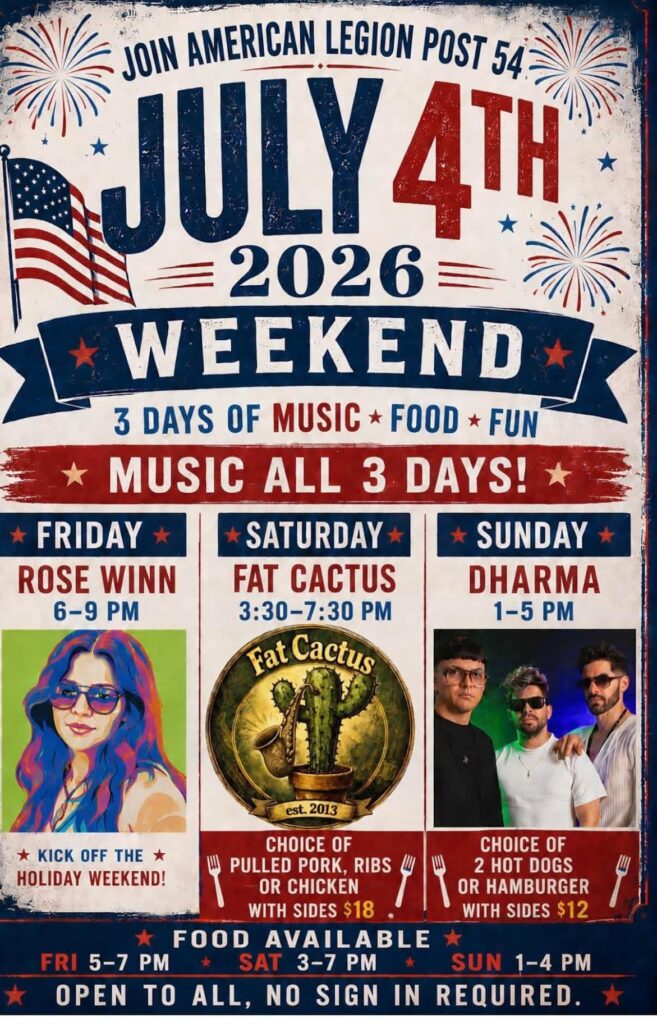
This July 4 my Texas-born wife, Linda, and I will happily and proudly celebrate with local friends and members of American Legion Post 54 and the VFW Post 4351 along with others from the local community.
Happy July 4!
That’s how a naturalized citizen should feel, eh? Hasn’t 4th/250!
Well done, Dave…..Happy 4th to you and your family from another Canadian-American
Exactly how I feel Dave – as a fellow (Grumpy Old) proud naturalized American.
Well put my friend and Happy 4th to you, Linda and family.
Thank you for you and your families service to America. Happy 4th of July from the greatest country on Earth. Cant wait to for the next 250 years!!
We are a beacon for the world! Thank you for sharing your story, Dave. God bless America!
Dave, thanks for sharing your inspirational and patriotic life story. Happy 4th.
After reading your blog, all I can say is “Great Scotts”!! While you may have Canadian roots you have embodied all the traits of all true Americans. Robin and I look forward to sharing a tipple or two this weekend with you and the birthday girl. God Bless America !
Dave,
Thank you for sharing your interesting journey and experiences. Such narratives humanize parts of the history of our country.
A few years ago, my wife Tish and I visited her mom in Charles Town WV. While in the area, we day-tripped a couple of hours to Gettysburg PA to see the sites of the Civil War battles that occurred on July 1-3, 1863. Most of the battle on July 1 took place on a farm, with the Union troops led by a Major General who took over the rather large farmhouse. The nearby barn became a field hospital. The Confederates and Union troops maneuvered and fought on the farm property.
The civilian sharecropper operating the farm evacuated his family from the farm to an available home in the city of Gettysburg. After the battles ended, the sharecropper John Slentz, whom I believe was my great-great uncle, negotiated to rent, then eventually bought the home from the Linsinbigler family.
With the help of a park ranger, we visited the farm sites including the barn used as a hospital where the Union Commanding General was treated for his wounds before his death. We asked if we could take a couple of apples from a tree on the farm property and were allowed to do so. Only after talking
with Rangers did we realize that Tish Linsinbigler’s ancestors had sold that home to the Slentz family.
Tish and I met and were married in 1988, 125 years after the battle. The history books we bought there had Slentz and Linsinbigler names sprinkled throughout, with photos of the farm and barn, and of the home my family bought from hers.
It was surprising to realize that our families had been so close to the battle on July 1. Gettysburg became more than a page in a history book.
Mr. Dave, a great write from a former Canadian and “PROUD” American!! Happy Fourth of July to you, your family and friends!!
Wonderful piece.
Gosh, Dave. I never knew this beautiful story. My dad & hubby were Army. Dad in WWII in Italy & husband in Vietnam (‘66). My maternal grandfather immigrated from South Africa. I have his naturalization papers. Paternal grandparents immigrated from Germany. Happy 4th of July!!
Dave, you’re a great American, a true patriot! Terrific family history-thanks for sharing it with us! God bless you, Linda and your whole family.
Happy 250th birthday U.S.A.🇺🇸
May the 4th be w/you Dave. We were @ the Legion last nite listening to Rose Winn, had a great time!! Happy 250th……God bless America!!
Dave. A wonderful tribute to your family and our great country. My family was from Canada also…..and Italy. (Think pasta with crisp bits of Canadian bacon in the sauce!).
Thanks Dave, I enjoyed your column. I hope you and Linda had a great 4th of July.
We do go back along way.
Your friend and 1940 DeSoto salesman.
Who did you go in with from our school ??
Jimmy Marsicano!